Showing posts with label Charlotte Mason. Show all posts

03 June 2014

What is the Charlotte Mason Method? - Simply Charlotte Mason

There is so much information in this article that rings true.  I just had to share it.  I hope it blesses your homeschool life as it has mine.


What is the Charlotte Mason Method?

The Charlotte Mason method is based on Charlotte's firm belief that the child is a person and we must educate that whole person, not just his mind. So a Charlotte Mason education is three-pronged: in her words, "Education is an Atmosphere, a Discipline, a Life."

An Atmosphere, A Discipline, A Life


By "Atmosphere," Charlotte meant the surroundings in which the child grows up. A child absorbs a lot from his home environment. Charlotte believed that the ideas that rule your life as the parent make up one-third of your child's education.
By "Discipline," Charlotte meant the discipline of good habits—and specifically habits of character. Cultivating good habits in your child's life make up another third of his education.
The other third of education, "Life," applies to academics. Charlotte believed that we should give children living thoughts and ideas, not just dry facts. So all of her methods for teaching the various school subjects are built around that concept.


Living Methods


For example, Charlotte's students used living books rather than dry textbooks. Living books are usually written in narrative or story form by one author who has a passion for his topic. A living book makes the subject "come alive."
And the students were required to tell back, or narrate in their own words what was read in the living book, in order to secure it in their minds. No fill-in-the-blank or multiple-choice for them; they practiced using rich language as they pointed out the ideas they gleaned from the reading and any mental connections they made between it and other ideas already residing in their growing minds and hearts.
She taught handwriting and s
pelling  by using passages from great books that communicate great ideas rather than using just a list of words.
She encouraged spending time outdoors, interacting with God's creation firsthand and learning the living ways of nature.
She introduced the work of great artists and composers to her students and let them spend time with each, getting to know their works personally.
She spread before her students a feast of ideas from a wide variety of sources—from Shakespeare to knitting to Bible to tramping through field and stream to algebra to singing to foreign languages. And woven throughout it all, she emphasized the habits of full attention, best effort, and learning for the sake of learning.
All designed to help the child grow; for we learn to grow.
It's no wonder that many homeschoolers have adopted her philosophy and methods as they seek to educate the whole child!
Take a look at this chart to see the variety of subjects included in a Charlotte Mason education along with the methods she used to teach each one. (Be sure to click the links for more details.)


Why I Chose the Charlotte Mason Method


In this video, Sonya Shafer explains why she chose to homeschool with the Charlotte Mason method.


Does the Charlotte Mason method sound like the approach you would like to use in your home school? Here's how to get started.

What They Don't Know - Simply Charlotte Mason


What They Don't Know

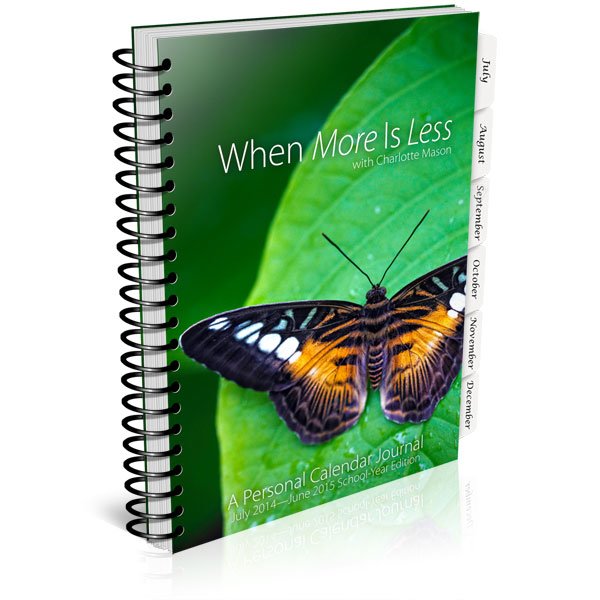
When More Is Less Calendar JournalI remember pulling some all-nighters during my high school and college years. A test was scheduled for the next day, and there were so many random facts and pieces of information to be recalled for it that every moment counted. Another hour and another memory trick might just secure a few more bits of information until the test. And the more I could stuff into my head, the better my chance at receiving a good grade.
It's funny, but I don't recall a single one of those facts now. Those cramming sessions had one goal in mind: to remember until the test. Once the test was over, my memory no longer needed to entertain those facts, and they were dismissed.
So the good grade, which was supposed to represent how much I knew about the subject, was only a testament to how much I could cram for the short term. I didn't really know.

They Cram But Don't Know


Cramming does not equal knowing.
In fact, the more information we throw at our students, the more they have to resort to cramming methods just to keep up. Once the test or assignment is over, their minds jettison most of those facts to make room for the next batch. How can we call this futile process "education"?
It's no wonder students who go through a perpetual cycle of cramming, testing, emptying, and cramming again lose their natural desire for knowledge. They have been schooled in a shallow counterfeit and develop an aversion to anything remotely like it. Thus, we end up with adults who stop reading; who stop wanting to know; who stop asking questions to satisfy their curiosity about things; indeed, who stop being curious at all; and as a result, who stop growing.
Cramming is not a modern technique. Charlotte Mason recognized its futility and the harm it can do:
"We all want knowledge just as much as we want bread. We know it is possible to cure the latter appetite by giving more stimulating food; and the worst of using other spurs to learning is that a natural love of knowledge which should carry us through eager school-days, and give a spice of adventure to the duller days of mature life, is effectually choked; and boys and girls 'Cram to pass but not to know; they do pass but they don't know.' The divine curiosity which should have been an equipment for life hardly survives early schooldays" (Vol. 6, p. 57).
What if, instead of filling and emptying and filling and emptying our children's minds in a futile endeavor to pass, we gave them less to know but expected them to really know it?
The simple truth is that we can't teach our children all about everything. It's impossible. No brain can hold that much information. As they are trying to keep up with today's information, so much more is being generated that they can't help but continue to fall behind. It's a mathematical fact in this information age.
We must make choices. We must select where our focus will be. If we have the courage, we can give our children a deeply meaningful education—one that esteems how well they know more than how much. And in doing so, we will also preserve for them the love of learning that will guarantee their continuing to learn all throughout their lives.

When More Is Less: New Calendar Journal


The article above was taken from our new calendar journal, When More Is Less. The new calendar was designed to help you discover the richness that simplicity can bring to your schedule, your home, and your children's education.
This handy school-year edition will walk you from July 2014 through June 2015 with encouraging articles like the one above, inspiring Charlotte Mason quotes, and plenty of room to write your personal notes.
The year-at-a-glance calendar, monthly calendars, looking-ahead thumbnail calendars, monthly divider tabs, and two-page spread each week will help you stay organized. Plus, special touches—like areas to jot down gentle reminders, prayer requests, and books you are reading—will combine to help you create a keepsake journal of your year. All with a gentle Charlotte Mason touch.
The When More Is Less calendar journal, 2014-15 School Year Edition, is available at a special introductory price through May 1.
Reduce the stress and enjoy the simplicity that Charlotte Mason's ideas can bring!

26 November 2013

A philosophy of education....

Have you ever known something but didn't have the words or thoughts to put it into words?  Well I have, many times in fact.  I think a lot of my brain freezes is because of the constant chatter that is going on around me all day everyday!  I can think fast, but as far as thinking something thru long enough to write it, well, that's a whole other story!  I'm always being asked the question; "What curriculum do you use in your homeschool?"  ERRR, UHHH, well, that's not an easy question.  Basically, a little of this, a lot of that, but none of the above!

If I were to try and explain a 'curriculum' I might be heard to say things like: Charlotte Mason, Sonlight, Classical, The Principal Approach, living books, and the study of Latin and the Arts.  "BUT, what curriculum do you use and what does all that mean?" (However eclectic I tend to go in our homeschool my intentions are to always incorporate CM's methodology in whatever resources I choose to use)

Thanks to Christine Miller I now have as close to my homeschool philosophy as I am going to get. At least until the chatter in my brain and in my world ceases long enough for me to use my own words. For now though I would like to share an awesome article that finally puts words to 'the curriculum that I use."  (However eclectic I tend to go in our homeschool my goal is to always incorporate CM's methodology in whatever resources I choose to use)

Here is a snippet to whet your appetite!

The Classical Christian Homeschooling approach to education takes from the best of both worlds, the world of school as play, the joy of discovery, as well as the world of the classical curriculum and academic rigor.  It recognizes the importance of Language and Latin for producing truly well-educated children, while tailoring how those lessons are presented to children in their different stages.  The teaching method, much more like Charlotte Mason in the elementary years, tries to retain the joy of learning strength of Charlotte Mason, while focusing the lessons on the strength of classical education, the core, the tools of learning. However, as a child matures, the method o teaching - dialectic and rhetoric - matures with him.  HERE is the full article.  


Music & Art Studies

I think besides history my favorite course of studies I do with my children would be art/artists/music/composer studies.  When I was a child I balked at the very idea of having to even listen to beautiful music let alone study a composer.  Not only did I hesitate in music but in art as well.  My father tried sharing art museums and classical music with my siblings and I more than once and each time he was met with hesitation.  Now look at me.  I have to laugh at myself!  In the words of Charlotte Mason, (whom I love) she has this to say:

"It is a pity that we like our music as our pictures and our poetry mixed, so that there are few opportunities as a listener a course of the works of a single composer...Let young people study as far as possible under one master until they have received some of this teaching and know its style."

and 

"We aim at putting the children in touch with the great artist minds of all ages.  We try to unlock for their delectation the wonderful garden of Art, in which grow most lovely flowers, most wholesome fruits.  We want to open their eyes and minds to appreciate the masterpieces of pictorial art, to lead them from mere fondness for a pretty picture which pleases the senses up to honest love and discriminating admiration for what is truly beautiful - a love and admiration which are the response of heart and intellect to the appeal addressed to them through the senses by all great works of art."

We have been enjoying art and music study for many years in our home and I love seeing "the fruits" of the knowledge my children have gained in this area.  I am surprised many times when they hear a classical song or see a painting to hear them spout out the name of the composer/artist!  And all this time I just knew they weren't paying attention!  The kids are continuing their Charlotte Mason ART and COMPOSER studies as we've always done but each year I like to add new and different resources to go along with CM resources as shown in the links above.  This year we are adding Usborne Introduction to Art, Stories of the Great Composers, Meet the Great Composers, and The Story of the Orchestra along with Dover's amazing and informative coloring books!  As I've written in the past we use learning journals in nearly everything we do.  I have the younger kids color a picture of the artist or composer and they copy or print and read basic information on them and enter it all into their journals. Our favorite online site for art that all the kids can enjoy regardless of age is A Garden of Praise.  Wonderful links to more learning that is fun and interesting.  And for classical music we frequent THIS site often.

While we are very eclectic in our homeschool as far as resources go our methodology has not strayed off course from Charlotte Mason's ideology on childhood education.  Enriching our children's minds (and mine!) with whole, living books has been a joyful experience.  Not to mention a gentle and relaxed one!

Charlotte Mason believed that children are able to deal with ideas and knowledge, that they are not blank slates or empty sacks to be filled with information.  She thought children should do the work of dealing with ideas and knowledge, rather than the teacher acting as a middle man, dispensing filtered knowledge.  A Charlotte Mason education includes first-hand exposure to great and noble ideas through books in each school subject, and through art, music, and poetry.

23 March 2012

Education as a series of relationships


Charlotte Mason defined education as a series of relationships formed by the learner as he developed intimacy with a wide range of subjects - something she called, "The Science of Relations." She believed that children should do the work of dealing with ideas and knowledge rather than the teacher acting as a middle man, dispensing filtered knowledge. Children should be taught the fallibility of reason, and that the responsibility of each individual is not in reasoning out the proofs, but in making sure the initial idea or assumption is sounds. She saw no separation between intellectual and spiritual life of children and adults, but believed that all truth is of God, regardless of the vessel it comes from.

Some things a Charlotte Mason education would include: (These few are my favorites)

1. Narration of course! Narration, which consists of the child telling back a story. This takes the place of composition in the early years. I love this one because it is so very natural for a child to 'tell back' experiences. They are able to 'connect' so well with the information they are narrating and in turn gain an even deeper understanding of what was learned and how to apply those things (presuming they are good things learned) to their own lives! Plus I love the ability to 'chat' with them as well and hopefully have an opportunity to share some true principles of life with them which we are taught in the scriptures. Because as Charlotte Mason says, "There is no separation between intellectual and spiritual life."

2. Habit training a as discipline of the child's will and behavior. Children are trained to develop the will, which is manifested in a strong resolve to act in a right manner. This one cannot be stressed enough. Helping our children gain good habits in behavior and in other areas of life is like giving them a gift. The gift of good habits learned will stay with them hopefully throughout their entire lives.

3. Living books rather than textbooks to convey ideas. Living books, whether fiction or non-fiction are more than just interesting books that make a tipic come alive. A true living book has the best material, from the best minds, or at least the real story from someone who was there or has a real interest in their subject. This is the one I am most grateful for. I grew up in the public school system and no such books were offered to me and it actually saddens me that this is the case. As I see it, it is the teachers responsibility to mentor the child and give the best of the best but that wasn't the case. I was only exposed to watered/dumbed down literature while as a child. But now as a parent I see the down fall of being brought up in such a light minded fashion and I can bring the best minds to my children through living books. I encourage parents everywhere, whether your child is in school or homeschooled, you too can open a world of great books to your children that they will treasure all their lives.

These are just 3 ideas that I love about home educating my children. I have the ability, time, and resources through the internet, home library, public library, and so much more at my fingertips to offer my children through their homeschooling journey.

101 reasons as to Why I homeschool reason #74

03 February 2012

The Homeschool Mother's Journal


For the week of January 30 - February 6, 2012

In my life this week....Just enjoying taking care of my daughter as she continues to heal from surgery and enjoying her company before daddy gives her away in April.

In our homeschool this week....sharing some of our favorite learning journal/commonplace entries. (We love journaling what we learn!)


Kaydee's 'copywork' drawings from Henri Matisse's The Goldfish and Open Window


Helpful homeschooling tips or advice....Enjoy the journey. I'm sure I could offer this 'tip' each week quite easily because it is my number one focus. They grow up so, so fast and being able to enjoy being with them from day to day has truly been the greatest gift in my life.

I am inspired by....Robyn and the strength and patience she is showing as she heals from all she has been going through.

Places we're going and people we're seeing....Again, hanging home with the ones we love.

My favorite thing this week was....taking this sweet photo of my little one in her TOO-TOO tight tu tu!


What's working/not working for us....My new schedule is working great and I love it that we focus on the main subjects only once a week but very, very much in depth.

Questions/thoughts I have....Why can't I just pop in my dvd of Jillian Michael's into my computer and sit back on the couch and "watch" it while at the same time get my workout in?!!

Things I'm working on....Incorporating more in the area of handicrafts.


I'm reading....Personally, nothing in particular this week. But for the kids I have been reading through A Child's Geography of the World, The Pharaoh's of Ancient Egypt, and D'Aulaires' Book of Greek Myths, and The Weather Book. I have made it my goal to be finished with these before our trip to Colorado in April so we don't have to leave with 'unfinished business'!

I'm cooking....oatmeal and adding CHIA seeds to it. Check out the link to learn more about this amazing seed.

I'm grateful for....My many prayers I prayed this week and the wonderful blessings we've received.

I'm praying for....Robyn and Luke as they are working through their long distance relationship until their marriage in April. Having Luke away at school has been very tough for her. And him!

This week's favorite photo....

Son Vance and wife Heather enjoying some rock climbing!

This week's favorite quote....

Making the decision to have a child is momentous. It is to decide forever to have your heart go walking around outside your body. ~Elizabeth Stone

07 November 2011

Curriculum choices and the individuality of children


I thought this article was well written and informative as it speaks on curriculum choices and the personalities of our children. (see link below for full article)

Love_Letter

When it comes to cooking, it seems that there are two kinds of people: those who follow the recipe exactly and those who tweak it.

Those who tend to stick to the recipe probably like the security of doing what they're told to do. Someone has already figured this out so I don't have to can be a comforting thought. But sometimes the recipe just doesn't fit your situation. Maybe the person who created the recipe has a passion for hot and spicy, while your family prefers mildly spicy. Maybe the recipe says to bake at 450 for 15 minutes, but you know that your oven struggles to keep a constant heat at that high of a temperature.


So most cooks learn to make adjustments. They might reduce the amount of cayenne pepper or leave out the tabasco sauce. They might add more minutes onto the baking time. Whatever adjustments they make, they tweak the recipe to better fit their families and their situations.


Curriculum is like a Recipe


Curriculum is a lot like a recipe. Whoever writes the curriculum is setting forth what he prefers; what worked in his situation. But just because the author presents it a certain way doesn't mean you have to use it exactly as is.


Maybe a certain curriculum moves a little too quickly for your child; you can adjust it to a slower pace. Maybe a curriculum doesn't include enough hands-on activities for your tastes; you can add some. Maybe you like everything about the curriculum except one little part; leave it out. Maybe a particular recommended "ingredient" isn't available in your location; substitute something similar.


Just as people who create recipes are dealing with ingredients, not your family's taste preferences or your finicky oven, so people who write curriculum are dealing with the material, not with your unique child. It's impossible to write a curriculum that will address the specific needs of every single child. That's where you come in.


As the parent-teacher, your focus needs to be on educating your child as a person. In fact, that premise is the foundation on which Charlotte Mason built her whole philosophy.


The central thought, or rather body of though, upon which I found, is the somewhat obvious fact that the child is a person with all the possibilities and powers included in personality.


So don't expect a one-size-fits-all curriculum to suit each unique personality in your family; it won't. But that's the beauty of homeschooling; you can make adjustments. Any time!


You have permission. It's your family. It's your child. You know him better than any curriculum writer ever could.


Teach the child; don't just teach the curriculum. ~full article can be found at Simply Charlotte Mason


This is why I LOVE homeschooling. I have so many different types of learners, personalities, and temperaments that there is NO way I could possibly try a one size fits all approach. Truly each child is different and having the ability to pick and choose what fits each child is key in preparing them for their special and unique walk that they will have to walk in this life. Other wise it's kind of like pushing a square peg into a round whole. It just doesn't work and trying to force upon a child something that 'we think' is a one size fits all curriculum will eventually bring frustration, unhappiness, boredom, etc. for all involved.
101 reasons why I homeschool #75

23 October 2011

Measuring spelling ability and teaching spelling


We have used the McGuffey Readers in our homeschool for over 20 years and continue still. In the little book I have titled The Parent-Teacher Guide for The Original McGuffey Readers we learn that spelling doesn't necessarily have to be taught as a separate subject but weaved in through their daily reading and writing.

First off, to measure a child's ability to spell you can use the Ayres measuring scale found here. It is a wonderful tool to access your child's performance in spelling. In teaching spelling I have found it effective for my children to keep a spelling word journal. Either they oversee it or I do depending on ability. Here's how it works. When a child asks how to spell a particular word I spell it for them but I also record the word in the spelling journal. Also, their words can be taken from their dictation work, writing, and reading. When you tally up 10 or 15 words then it is a good time to have them study the words and prepare for a test using their own misspelled words. Charlotte Mason suggests a way to study words which is simple and effective. Have the child look at the word as if it were a picture. Say it, spell it, take a photo of it in the mind and then close eyes to picture it in the mind. I have my kids do this and with their eyes closed and I have them spell it over a few times in their mind and look at the word again. Most of the time they are correct and manage to remember the spelling in the future.


21 October 2011

Out-of-Door Life For The Children

I.––A Growing Time

Meals out of Doors.––People who live in the country know the value of fresh air very well, and their children live out of doors, with intervals within for sleeping and eating. As to the latter, even country people do not make full use of their opportunities. On fine days when it is warm enough to sit out with wraps, why should not tea and breakfast, everything but a hot dinner, be served out of doors? For we are an overwrought generation, running to nerves as a cabbage runs to seed; and every hour spent in the open is a clear gain, tending to the increase of brain power and bodily vigour, and to the lengthening of life itself. They who know what it is to have fevered skin and throbbing brain deliciously soothed by the cool touch of the air are inclined to make a new rule of life, Never be within doors when you can rightly be without.

Besides, the gain of an hour or two in the open air, there is this to be considered: meals taken al fresco are usually joyous, and there is nothing like gladness for converting meat and drink into healthy blood and tissue. All the time, too, the children are storing up memories of a happy childhood. Fifty years hence they will see the shadows of the boughs making patterns on the white tablecloth; and sunshine, children's laughter, hum of bees, and scent of flowers are being bottled up for after refreshment.-Charlotte Mason vol 1 page 43

04 October 2011

How we use Halliburton's Book of Marvels

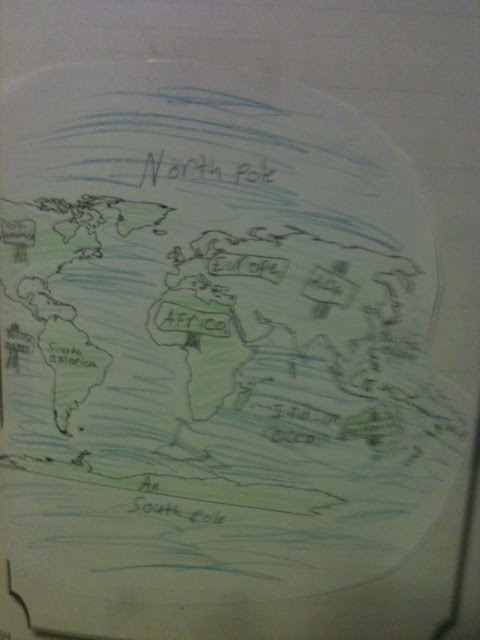
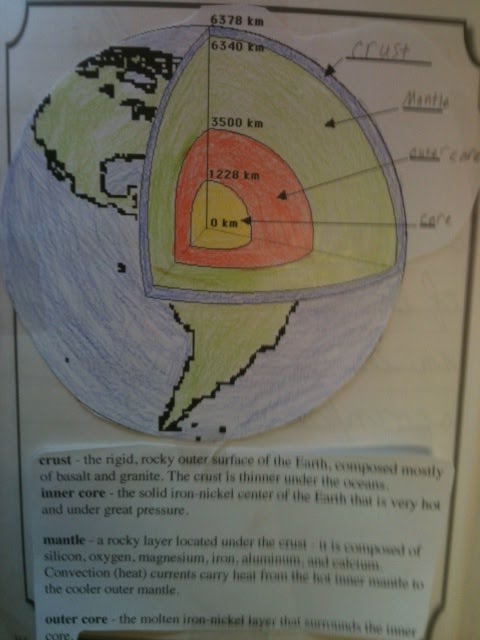
If you love Geography as my twins do you would love these two books. Recommended by Charlotte Mason and used with the Ambleside curriculum. We basically use them in the same way as anything else. By making entries in our commonplace books. Below are some pages from my twins' copybooks. We use the same format of adding entries as we do with anything else we learn. Here is the link for another post I made that explains commonplace books more thoroughly and how we use them.


25 August 2011

All of a Kind Family and give away!


We have been reading the All of a Kind Family books and enjoying them very much. My 5 youngest girls have loved reading about the life of other 5 little girls who, in so many ways are just like them. Along with the stories of this delightful Jewish family we have been learning all about the Jewish Holidays and the traditions associated with them. Here are our favorite books that we are using along All of a Kind Family. AND, since we have completed our first book in the series and have finished with the guide I would like to bless another "All of a Kind Family" from Queens Homeschool All of a Kind Family study guide. Even if you don't have 5 little girls in your home, you will enjoy these precious books as you snuggle together for some great family reading time. If you would like a chance to win the guide for your family simply leave a comment letting me know. I will announce winners one week from today. Good luck!

23 July 2011

Literary prose of the King James Bible

The KJV was penned at the pinnacle of English writing style, and it served as a common fount of influence for classic authors for over three hundred years. For this and other reasons we'll explore , the KJV stands alone as being uniquely suited to serve as our "prime spine" in classic literary curriculum. The way children encounter information today is changing. As image-based information becomes more prevalent, our cultural mastery of language is eroding. In response, modern schools move toward materials and methods that are more image-based, and less language-based, than those used in the past.

But the great teachers of the past knew something so simple it's profound: wrestling with rich language develops a strong, agile mind. Their master tool was a literary curriculum, which is inherently language-based. Studies now confirm what they knew by instinct: whereas images are largely passively received and require minimal exercise of the brain, grappling with languag requires the mind to work, flex, expand, and make connections.

However, the watered-down English that modern children typically encounter is by no means a worthy wrestling partner.

On our way toward understanding why the KFV is a primary foundation for modern readers of great literature, we must first note that the master tool of a literary education, the English language, has become peculiarly fluid in our day. English has always been remarkable among languages for its flexibility - its capacity to evolve over centuries according to need. However, this new millennium finds the language in rapid flux. Technology, the mass media and other influences force newly-morphed words upon the language at warp-speed, while various fields and interests, ever multiplying, continuously spawn their own specialized vocabularies.

At the same time, as our hurried postmodern ears grow more itchy for sound-bites than for rich, exact language, we've gradually lost thousands of precise and useful words from common use. Dictionaries require revision with increasing frequency, as publishers find that trying to define what has perhaps become undefinable - "standard" English - is rather like trying to paint the definitive portrait of a chameleon.

Which brings us back to the matter at hand...In sharp contrast to the slippery state of language in our day, the King James Bible was translated during the singular window of time when the English language was at its zenith in terms of stability, as well as eloquence. Scholars and writers of that era possessed deft command of the nuances of grammar and syntax, because their educations were rooted firmly in the study of the static ancient languages of Latin and Greek. This served to standardize and inform elements of style and usage in their writings, to broaden and elevate content, and to produce a rich, colorful tapestry of vocabulary in their works. Their prose and poetry is agile, expansive, exacting, lyrical, bracing. English in the days of King James and Shakespeare was high art, in both product and form.

And so it happened that the King James Bible was translated by scholars of a uniquely verbal, word-dependent age. We can scarcely imagine such an age nowadays, utterly devoid as it was of our modern dependence on image-based informations. Absent our unbiquitous glut of flickering screens, visual media and instantly available music, we sense that mere words in that day more truly tickled the eye and ear. A fresh page of written words commanded eager, vigorous attention, being the sole cultural transport of news and ideas aside from word-of-mouth. Vocabulary was a craft; more lithe, richer in breadth and depth, more colorful. Sentence construction was an art form in itself!

This richly verbal culture sparkled fro a moment on the timeline of civilization, and flung forth a galaxy of literary minds the caliber of which the world will not likely produce again. The crumbs that fell from their tables have sustained every subsequent generation of authors.

So why is this important to you and me, all these centuries later?

The King James Bible is uniquely foundational to Western literature. Take a quick glance through those lists of "Great Books" we all stew over when planning school terms, and mentally highlight the titles written between roughly 1611 and 1930 (which will be the vast majority!) Can you think of one thing most of those books have in common? It's this: most of their authors were intimately familiar with the King James Bible. The result? Its influence is inextricably woven into their works, informing their phrasings, illuminating their expression, and burying treasure chests of meaning beneath the surface of their words.

Those great minds of that halcyon era are the backbone, breath and muscle of the books employed in advanced literary curriculums such as Ambleside Online and House of Education Online. These are the minds daily appealing to your child's mind, whose great thoughts and ideas your child is continuously narrating and absorbing. And the majority of those authors share the KJV as a common fount of though, tone, ideas, construction, phrasings, and references. Therefore, as your children become more familiar with the KFV, they will also become increasingly more as ease with an expansive body of great literary works. It's like having the map to buried treasure.

Classic books are steadily moving beyond the grasp of modern readers. A widening language chasm cruelly threatens to separate us from our own cultural treasures. By choosing the KJV, we bridge that chasm, and in crossing over find ourselves strolling amidst wise and benevolent giants.

And yet, despite the sure benefits, perhaps you still fear the KJV will be unapproachable for you and your children. After all, we've been barraged by publishing marketers with the notion that the KJV is just too hard for us (despite the fact that it was originally purposed as a Bible for the common man?)

Do you note the curious double standard afoot here? It seems we do not hesitate to set our children upon a daunting course of Latin to expand their vocabulary and grasp of great literature; we enthusiastically endorse a steady course of 'real' Shakespeare; we hand our children old, weighty volumes such as Bulfinch's Mythology and Plutarch's Lives because they are bedrock foundations of Western literature. Why, then, do we look upon the King James Bible, which offers similar language experience as well as unexcelled, broadening literary enrichment, with fear and hesitancy?

No need to keep you distance: the KJV is a truly accessible work. After all, it was the Bible of common folk for over three hundred years, read by peasant and scholar alike. And its effect was powerful - the church in that period flourished. Here we have the most universally beloved and captivating book in Western history, and we should be reassured to note that if all those legions of readers could handle it, surely we may expect to as well.

Charlotte Mason also preferred the use of the King James for teaching, and encourages us that children can indeed adapt to its style: "It is a mistake to use paraphrases of the text; the fine roll of Bible English appeals to children with a compelling music, and they will probably retain through life their first conception of Bible scenes, and also, the very words in which these scenes are portrayed." (Mason, Vol. 1 p. 249)

Every little effort you make will strengthen your children toward a comfortable familiarity with King James English. It may not happen overnight, but be encouraged that the human mind is
adaptable and can rise to most challenges. You'll soon find great pleasure in that "fine roll of Bible English," and find the KJV a familiar friend who unlocks many once-mysterious literary passageways for you. Your children will begin making those delightful "Aha!" connections with KJV allusions in their books (indeed, everywhere!)...buried treasure which otherwise would have passed by unclaimed.~~Lynn Bruce

So...Why the KJV? "Because when you walk among giants, it's good to keep up."


16 July 2011

Picture Study Portfolios – Simply Charlotte Mason

Picture Study Portfolios – Simply Charlotte Mason

This looks pretty cool. Even if you are not a fan of Charlotte Mason's methods this can be a great addition to cultural arts study. If you've tried it I'd love to hear your experience with it!

20 May 2011

Picture study, drawing, and copywork


I try to encourage the kids to draw from their imagination and to draw from what they see around them. Here are a few of their latest projects. One of the ways I love to encourage their study of fine art is to pick one drawing a week to 'copy' into their notebook. It usually replaces their 'copy work' assignment for that day. In this way they tend to look closer at the picture and as a result their 'study' of it seems to go more in depth. Here are some of our favorite books that help us along in our study of art. Another thing that helps us in our picture study is my notebook with 8x10 photos from Ambleside tucked away in sheet protectors. Office Max is happy to print them for .67! And on photo paper.

A spare board that Emma found lying around and decided to put it to good use. It is a permanent decoration now in our dining room.


I find that all I have to do is read a story to the kids and afterwards they automatically jump to the table to draw it out!!

What is seen across the street from where we live!

The Carl books are absolutely loved in our house. I have more Carl drawings than anything else stored safely away!

King Arthur from Discovery of the New Worlds

Here from one of our Come Look With Me books is one of the drawings Kenzie did for 'copywork'


30 April 2011

Homeschooling~The Early Years


If you are just beginning to homeschool or are considering it for the future here is a resource well worth looking into. An excerpt:

A Parent's Chief Duty
1. Understand that bringing up and educating your child is the most important job in society.
2. Form in your child right habits of thinking and behaving.
3. Nourish your child's mind with loving, right, and noble ideas.

For more on homeschooling the early years click on the link below.

17 January 2011

Sharing poetry with children

Finally, brethren, whatsoever things are true, whatsoever things [are] honest, whatsoever things [are] just, whatsoever things [are] pure, whatsoever things [are] lovely, whatsoever things [are] of good report; if [there be] any virtue, and if [there be] any praise, think on these things.~Phillipians 4:8

"A man should hear a little music, read a little poetry, and see a fine picture everyday of his life; in order that world cares may not obliterate the sense of the beautiful which God has implanted in the human soul."~J.W. von Goethe

So many times these areas of education (or training) get slid to the back burner. Keeping my current poetry book with my scriptures is the best way I have found to see to the reading of poetry everyday. Right after our devotionals I am then prepared to read a few selections. I agree completely with Charlotte Mason when she says: "We can hardly do better than to lead children to reflect on some high poetic teaching, for it is here that the young and aged mind continue to feast, providing food for moral understanding, reverence, imagination, and true loveliness." She maintained that this sort of teaching so be given on a daily basis. Memorizing, copywork, and recitation are all ways in which we can incorporate poetry into the daily lives of our children.

We are currently reading A Child's Treasury of Poems. It is perfectly fit for the ages of my younger ones. It is loaded with gorgeous pictures and the kids love to imitate them in their drawings. My older children are reading selections from The Oxford Book of Children's Verse by Iona & Peter Opie. I believe this is out of print right now. We found an old library copy that we are using.


Followers