29 October 2011

Hope comes after opening Pandora's Box

"Hope is necessary in every condition. The miseries of poverty, sickness, of captivity, would, without this comfort, be insupportable." ~Samuel Johnson
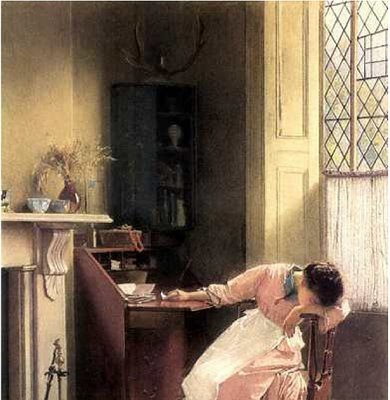
Weeping-in-Prayer3

From the story: The Paradise of Children (a story that captivated my mind and set me to thinking on what hope truly is and how it blesses our lives)

The naughty little Pandora had opened the box. "Now if you wish to know what these ugly things might be, which had made their escape out of the box, I must tell you that they were the whole family of earthly Troubles. There were evil passions; there were a great many species of Cares; there were more than a hundred and fifty Sorrows; there were Diseases, in a vast number of miserable and painful shapes; there were more kinds of Naughtiness than it would be o any use to talk about."

Amazingly, Pandora had closed the lid so quickly that she had left one more 'person' in the box. Undecided as to whether or not to open it again after all her previous 'troubles' to let it out she was convinced to do so because of the sweetness of the voice she heard in the box.

"Pray, who are you, beautiful creature?" inquired Pandora. "I am to be called HOPE!" answered the sunshiny figure. "And because I am such a cheery little body, I was packed into the box, to make amends to the human race for that swarm of ugly Troubles, which was destined to be let loose among them. Never fear! We shall do pretty well in spite of them all."

HOPE!! One definition, and one that brings to mind the very essence of hope is....
Confidence in a future event; the highest degree of well founded expectation of good; as a hope founded on God's gracious promises; a spiritual sense. 1828 Webster's Dictionary

Blessed is the man that trusteth in the Lord, and whose hope the Lord is. Jeremiah 17:7

25 October 2011

A NEW Mother Goose Rhyme for families!!


I had to laugh when one of my little daughters went about reciting this Mother Goose rhyme today after we finished reading our poems. We read several but it seems this one was the most popular!!

There was an old woman who lived in a shoe
She had so many children she didn't know what to do
She gave them some broth without any bread
Then whipped them all soundly and sent them to bed!

Except she changed a few words. Her rendition went like this:

There was an old woman who lived in a shoe
She had so many children she didn't know who was who
She gave them some broth without any bread
Then whipped them all soundly and sent them to bed!

Okay, so I get a little tongue tied once in a while. Who doesn't?


24 October 2011

What's for dinner?

I love that my kids know how to find their way around the kitchen. My twins are first rate when it comes to planning AND cooking an entire meal with dessert included. Here is one of our fall/winter favorites they made for us this week. And the cake was to die for. I highly recommend you try this recipe. They found it in one of my Taste of Home magazines.
Kielbasa sausage links
Potato Pancakes
Sliced tomatoes
Chocolate Buttermilk Cake


Cake Recipe
1/4 cup baking cocoa
1 cup water
1/2 cup butter, cubed
2 cups flour
2 cups sugar
1 teas. baking soda
2 eggs
1/2 cup oil
1/2 cup buttermilk
Icing
1/4 cup cocoa
1/2 cup butter
1/2 cup buttermilk
3 3/4 cup confectioners' sugar
1 teas vanilla
1/2 cup chopped pecans, optional
Combine cake ingredients until smooth and bake in 350 oven for 35 minutes. Ice and enjoy.


23 October 2011

Measuring spelling ability and teaching spelling


We have used the McGuffey Readers in our homeschool for over 20 years and continue still. In the little book I have titled The Parent-Teacher Guide for The Original McGuffey Readers we learn that spelling doesn't necessarily have to be taught as a separate subject but weaved in through their daily reading and writing.

First off, to measure a child's ability to spell you can use the Ayres measuring scale found here. It is a wonderful tool to access your child's performance in spelling. In teaching spelling I have found it effective for my children to keep a spelling word journal. Either they oversee it or I do depending on ability. Here's how it works. When a child asks how to spell a particular word I spell it for them but I also record the word in the spelling journal. Also, their words can be taken from their dictation work, writing, and reading. When you tally up 10 or 15 words then it is a good time to have them study the words and prepare for a test using their own misspelled words. Charlotte Mason suggests a way to study words which is simple and effective. Have the child look at the word as if it were a picture. Say it, spell it, take a photo of it in the mind and then close eyes to picture it in the mind. I have my kids do this and with their eyes closed and I have them spell it over a few times in their mind and look at the word again. Most of the time they are correct and manage to remember the spelling in the future.


21 October 2011

Out-of-Door Life For The Children

I.––A Growing Time

Meals out of Doors.––People who live in the country know the value of fresh air very well, and their children live out of doors, with intervals within for sleeping and eating. As to the latter, even country people do not make full use of their opportunities. On fine days when it is warm enough to sit out with wraps, why should not tea and breakfast, everything but a hot dinner, be served out of doors? For we are an overwrought generation, running to nerves as a cabbage runs to seed; and every hour spent in the open is a clear gain, tending to the increase of brain power and bodily vigour, and to the lengthening of life itself. They who know what it is to have fevered skin and throbbing brain deliciously soothed by the cool touch of the air are inclined to make a new rule of life, Never be within doors when you can rightly be without.

Besides, the gain of an hour or two in the open air, there is this to be considered: meals taken al fresco are usually joyous, and there is nothing like gladness for converting meat and drink into healthy blood and tissue. All the time, too, the children are storing up memories of a happy childhood. Fifty years hence they will see the shadows of the boughs making patterns on the white tablecloth; and sunshine, children's laughter, hum of bees, and scent of flowers are being bottled up for after refreshment.-Charlotte Mason vol 1 page 43

17 October 2011

16 October 2011

Speaking of fires and printing books

We had our first fire of the season in our stove today. I'm not sure it was extremely cold outside but inside I was freezing. (Of course, as my husband will say, I am the ONLY one freezing). At any rate, it was warm and cozy and I look forward to many more such evenings as this as winter approaches here in the north!! And while I'm on the subject of fires my girls have been reading these wonderful little books called Campfire Girls. They can be printed from the internet and here is are a couple tips I use when I print books from the computer.
I like to use both sides of the paper if at all possible. For the first 2 books in the series I printed out book one, then I simply turned the paper over and printed book two on the other side. I then place the paper in sheet protectors and place in a 3 ring binder. (right photo)

The children are used to reading my printed books in this way but it may seem a bit tricky at first. I keep 2 books in one binder. On the front page of each sheet protector is book one and on the backside of each sheet protector is book 2. So, in a sense they 'skip' a page in between each page read. When they are finished with the first book they simply read the page on the backside of each sheet protector.

I also have another tip I use that help keeps each book in order. The first book in the binder I print in the normal fashion, then I flip the paper over in the printer and print the second book by changing the orientation setting on my printer to print it more in a landscape fashion. Then there is no confusion whatsoever when a child turns pages. They easily see where they are because one page is sideways and the other is right side up. The younger children's books work well this way as they tend to get a bit more confused. By seeing the page sideways they know they are to continue on the opposite side where the pages are 'normal.' Then when they finish book one they turn the notebook and read in that fashion for the second book.

We choose our books to print from Old Fashioned Education, Project Gutenberg, or from our A2 cd or our Robinson Curriculum cds. All are great books from years ago when books weren't so watered down as they are now. These books are also choice for learning vocabulary. As shown in the photo above left each of the children has a copybook in which words they come across and don't know the meaning of are written down from each chapter. In this way, their vocabulary words are literally custom made to fit each child and no other vocabulary curriculum is needed.

For printing needs we use the Brother HL 5370 DW that came recommended way back when I
bought my Robinson Curriculum. It works great. Prints quickly and you get many, many pages from one ink cartridge. I so much prefer holding an actual book in my hands while rather than looking at the computer. In some cases we do need to use both if there is more than one child reading the same book though.

14 October 2011

Finding words that "fit" the child

Describing our children in words can be at times a bit of a challenge. They all tend to 'wear' so many words on their sleeves at any given moment that it truly can take an entire dictionary to find the words to describe all that makes up their spirits. Here is a photo I grabbed of our Kenzie after reading a story. She chews on every word over and over in her mind from everything she hears or reads. Do you have a child like this?


My word I've chosen for her today and most days is 'contemplative' from the word 'contemplate'

To view or consider with continued attention; to study; to meditate on. This word expresses the attention o the mind but sometimes in connection with that of the eyes; as, to contemplate the heavens. More generally, the act of the mind only is intended; as, to contemplate the wonders of redemption; for example. 1828 American Dictionary of the English Language

10 October 2011

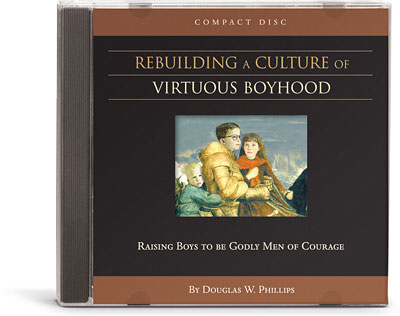
Rebuilding a Culture of Virtuous Boyhood give away

Slowly but surely I am working through years of homeschooling materials and this week I ran across a sealed cassette tape of Rebuilding a Culture of Virtuous Boyhood by Vision Forum and realized my boys have listened to this on more than one occasion. As often happens I end up with duplicates and I actually had bought this not remembering or realizing I already owned it. At any rate, if any of you are interested in it just leave a comment letting me know and I will announce the winner on October 17th. You can review it HERE

04 October 2011

How we use Halliburton's Book of Marvels

If you love Geography as my twins do you would love these two books. Recommended by Charlotte Mason and used with the Ambleside curriculum. We basically use them in the same way as anything else. By making entries in our commonplace books. Below are some pages from my twins' copybooks. We use the same format of adding entries as we do with anything else we learn. Here is the link for another post I made that explains commonplace books more thoroughly and how we use them.


Followers